
I’d like to pretend the gap between this Barrage and the last was due to extended wintertime festivities. In reality, I was caught in the pesky grips of FromSoft and their beloved Souls series, specifically Dark Souls 2 and Dark Souls 3. I have a lot to say about both of them, enough to consider both review worthy, though knowing me I’m not sure I’ll get around to doing either justice. In the hope I will get around to it however, I’ll be incredible brief and glib in saying one ignited such a flame of adoration is eked past both Elden Ring and Dark Souls 1 to be my favourite Souls game, packed with palpable atmosphere, beautifully intricate level design, and a vast array of memorable and challenging bosses. The other is Dark Souls 2.
The rest of this week’s Barrage is pieced together from the time I spent not playing a Souls game, which was admittedly not much.
My time with Jotunnslayer: Hordes of Hel was unfortunately cut short due to a near game-breaking bug in the fourth area. The end boss, the Construct Jotun, is practically impossible to beat due to some pesky invisible death rays. Confirming the bug in the typically hellish pits of the Steam discussion pages did bring some relief by restoring the sanity which evaporated after my nth attempt at the bastard. Placing that sour experience behind me, I did enjoy my time with the game. I think people who’ve never played a Survivor-like look at footage of these games with the same stupefied expression one might look at professional table tennis players rally the ball between each other at seemingly inhuman speeds. Jotunnslayer did at times fall into this realm of being almost completely unintelligible, and unlike with Vampire Survivors, I did struggle to determine my power level. One minute I’m blasting through the toughest enemies of a raid, the next I’m completely swarmed, gasping for any pixel not occupied by a demon.
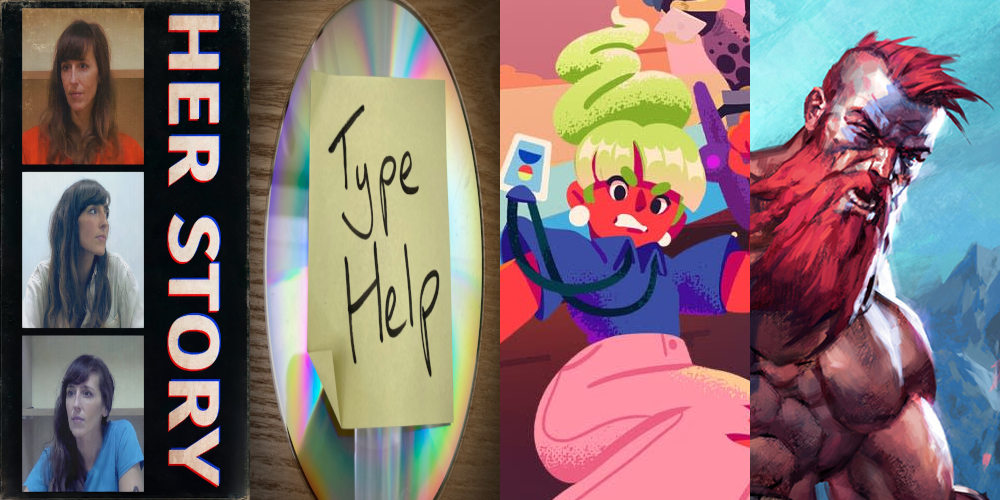
Similarly to Vampire Survivors however, it’s quite hard to put into words how cathartic it can be when you hit your stride. I found these moments most common with the Revenant character, going all in on a basic attack build and combined with a level 11 subclass boon, literally just standing still watching the hordes collapse before me was supremely satisfying. It sounds dismally uninteresting put into text form, but in motion it’s a destructive force to behold, doubly so thanks to the well realised theme. From the funky name alone, you can probably infer the Norse backdrop. The cretins you fight range from spooky, scary skeletons to bile-spitting ghouls. We can, of course, play as a brawny topless chap with a penchant for axe swinging. The cast of gods ranges from the household staples of Odin and Thor to some Dwarven fellas I’ve never heard of, but do feel very fitting. Each new area embodies a palpable atmosphere, from the blustery peaks of Jotunheim to the blistering hellscape of Muspelheim. Jotunnslayer is an all round solid, enjoyable entry in a burgeoning genre which I currently can’t recommend due to a solitary bug.
Or can I? In a new year’s twist (though given how egregious this bug was, it’s not surprising in any way) weeks after this initial write-up, I got a Discord notification from the Jotunnslayer server announcing the bug has been squashed. So yeah, I can recommend it. Give it a shot.
In a late year surprise, a potential game of the year challenger enters the ring. “Challenger” probably isn’t the right word, since Hades 2 has had that firmly locked down since full release, but in a world where Supergiant didn’t bestow upon their heavenly nectar, Type Help would’ve certainly had a shot at taking the crown. I only learned about this has Jon Ingold of Inkle nominated it for his GOTY, and a quick search led me to the game’s itch.io page, where it exists as a free browser game. It’s a text adventure with a heavy investigative spin, a la Her Story but with practically no visuals. Type Help’s best attribute is that it’s always forcing you to reevaluate what you know, scanning transcripts and flying between events chronologically based on later information. My initial impressions of the cast of characters was quickly dissolved and in their place new evaluations formed, only to melt into the same liquefied pool to have fresh judgments arise. The game’s premise, initially it would seem a simple murder mystery, quickly devolves into chaos and my mind ran amok trying to make sense of it all, which for a game all about vacillating assessments is rather useful.
By the end of the game, there were still tinges of confusion which put a dampener on my overall understanding and therefore enjoyment, but I’m also privy to the idea this could be on me, and spacing this over the course of 3 play sessions likely didn’t help. On that note, if you do play this, do yourself a favour and set aside an entire evening for it. Get absorbed by whodunnit of it all, create links in the moment rather than notes for later play sessions, and hopefully love it as much as I did. With a remake coming next year with some of them fancy-schmancy visuals, it’s safe to say I’ll be there day one, even if I am of the opinion part of this game’s charm is the lack of sensory information.
As I ruminated over Type Help for a few days, I did feel a compulsion to give Her Story a proper shot. I had briefly played it in the past when Sam Barlow’s FMV revitalisation efforts were in their nascency, but bounced off it after less than 20 minutes going by my Steam stats. I’ve racked up over an hour since, though frankly I don’t consider it time well spent. However I can appreciate parts of Her Story in isolation. Viva Seifert’s performance is the obvious place to start, and accounting for intent I think she does a swell job. I couldn’t help but draw parallels to the facade built by convicted murder Jodi Arias’s; a cringe-tinged, exaggeratedly playful portrayal of a young lady with dark secrets. Given the proximity of the game’s release and Arias’ trial, I can’t help but suspect there was some degree of inspiration here, though that assumes Seifert’s character is indeed a character of dubious morals, because despite my hour-long investigation, I didn’t learn many hard facts.
It’s principally a result of Her Story’s lack of gamification. While both Her Story and Type Help are chiefly doing the same thing in having the player comb through old evidence to unravel a mystery, the latter’s clear objectives makes progress more identifiable and, in my experience, rewarding. Type Help has an end screen to boot, and the transparent way investigation material is organised also makes optional objectives immediately apparent. Outside a tracker indicating how many videos you’ve uncovered, Her Story is completely hands-off, and I’m unsure if there is even an “end state” so to speak. From what I could gauge from player reviews (which I resorted to when I got a bit bored with aimlessly flicking through interrogation footage) this is also a sticking point for others. Her Story is about the experience itself, and if you can’t latch onto that exclusively, you’re done for.
It ultimately killed any enjoyment I could’ve possibly had with the game. Without some form of objective, without mechanics in which you can place footage in a structured format to make sense of things, I was just left with watching videos and piecing together a story in my mind, and hopefully remembering it all when the time came to finally put the game down. Unfortunately, the mystery being unravelled here just didn’t intrigue me either, which I leave as a secondary complaint as with the proper structure of a video game, perhaps I would’ve enjoyed it more. As is, Her Story is a collection of videos performed cromulently by an actor for a purpose I simply didn’t understand.
To take a sharp turn away from plodding investigative adventures, I think Jotunnslayer lit a fire within me for a good rogue-lite, and since I’d recently re-listened to some of its soundtrack, I went with Going Under. Is it a good rogue-lite? Yeah, kinda. It’s a bit bland gameplay wise, offering very little customisation and build diversity. What is there is fun. I found myself opting wherever possible for thrown weapon builds; the “yeet” skill combined with the skill which transforms you into a veritable beefcake made throwing filing cabinets and oversized coffee pots rather satisfying. The weapons feel good, particularly when you get into a groove of launching enemies at walls for bonus damage, though the combat as a whole suffers a touch with the floaties. I couldn’t quite make out if iframes exist in this game, as one slip up can have you piled on with attacks, knock back and damage which seemingly no way to get out of it.
But we can’t look at games in isolation, and rogue-lites operate in a particular niche aimed at a particular crowd that often demand things that aren’t typical of most games, like extreme replayability and the tightest of gameplay loops. Regrettably, despite my enjoyment of Going Under as a pure gameplay experience, it’s not an exemplary example of either, though Aggro Crab prove themselves more than capable of topping off an otherwise unadventurous game with explosive personality. Ostensibly a critique of corporate culture, Going Under’s themes of passion, AI, work, and humanity in a broader sense are realised with both written and physical humour, topical and apposite dialogue, and a cheeky subversion of the Corporate Memphis art-style. And yeah, that soundtrack? Earworm after earworm. I found it fascinating how much relevant character composer Feasley was able to pack into each track, with the horny bed squeaks in the Tinder-spoof WinkyDink level and robotic, sterile notes of the Fizzle lobby being particularly noteworthy examples. What Going Under lacks in creative spark with its combat and longevity unlike other titans of the genre, it makes up for with a nicely abridged game length bursting with charisma and charm.

 Breaking the Backlog
Leave a comment