
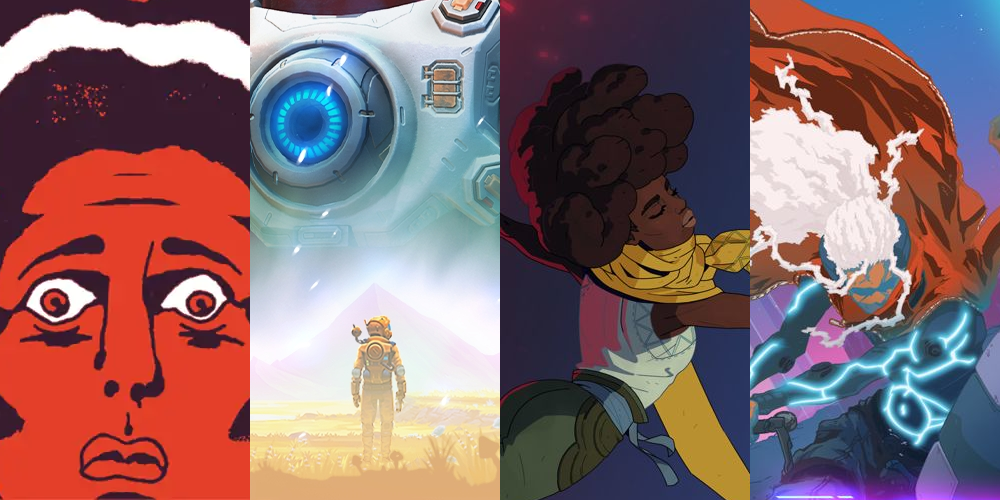
I played Horses. It was quite hard to judge this game on its own merits since it felt like a part of my mind was tainted by the controversy surrounding it, or rather the drama which spun off the initial controversy. I would highly recommend checking out Edwin’s review for RPS which spotlights the game’s themes far more eloquently than I ever could, though my own interpretations were much more rudimentary and as a result perhaps my overall conclusions are less enthusiastic. A major high point of the game is how it manages to effectively juggle disparate tones. The game is consistently tense and uncomfortable. At times that shifted more in a disgusted direction via brutality and gore, other times I was merely on edge, anticipating a jump scare I knew wasn’t really coming. Sometimes it would be undercut with a humorous gag, which was actually a welcome reprieve. For the majority of the game, I was absorbed by how it explored themes of sexual depression and how they stem from institutions – even if it did by and large seem quite on the nose – but my attention ended up drifting for the final few in-game days as it felt like it was coming to a close too quickly. I would’ve liked to have seen an extended cut of this to give everything a little more breathing room.
And I just really want to stress how patently stupid, reactionary, and ignorant the outrage surrounding this game was. I see it partly as a symptom of the growing trend of anti-intellectualism, which isn’t to say anyone who doesn’t like it is dumb, only that some people are too quick to brand anything they don’t understand as wrong. In the words of DOOM: “Pan it, can’t understand it, ban it”. The knock on effect this sort of puritanical hysteria has for the perception of video games is rather grim too. Horses is no more shocking than what you can find in cinema or literature (many have been quick to point out how blatantly inspired by Salò it is), and this instinctual disgust for anything a bit out there gives this medium its stereotypical immature image. I also need to stress how profoundly silly it was seeing the contextless admonishments that this game was in any way endorsing CSAM, when one of the very obvious themes of this game is power (be it religion or the responsibility of ones own kin) often transposes regressive beliefs on others. As Edwin points out in his review, the fact every character is a legal adult is immaterial to the point being made.
Rant over. I spent too much money on a beanbag chair. To justify the purchase I’ve been spending more time with the Steam Deck again, a joy in itself. I’ve so far finished Dandara and am making my way through a replay of Furi. With the former, it turns out the “Trials of Fear” edition is significantly different from the version I first played, and I wouldn’t say for the better. The new areas added act as an odd challenge zone, with a focus on gimmicky difficulty. They’re plonked like right near the beginning and I got lost in them, and just generally didn’t enjoy them that much. Supposedly this version adds more story, but I didn’t get anything from it.
As for Furi, beautiful game. Banging soundtrack, tight combat, expressive character designs, and a no nonsense gameplay loop. I actually attribute this game to helping me understand Souls-likes a bit better, despite not being one itself. The idea you learn through death, fighting a boss over and over again to learn it’s moveset. That’s Furi in a nutshell, with some furry narrating the downtime between them.
I’ve having a bit of a battle figuring out what I ultimately think of No Man’s Sky. One second I’m weaving through space, simulated speed smacking my senses as if I were really there. I’m idyllically mining for exotic resources while briefly hopping with my jetpack over to some alien lifeforms I can barely understand, hoping they’ll shift all these rare relics I found deep under this bizarre planets crust. I even spent some time building up a base, moulding the terrain to my liking, erecting a hub I can only describe as “somehow less visually appealing that the houses I make in Minecraft”, but proud of it all the same. But the next second I’m floating through the atmosphere, clear goals in mind, yet struggling to find the motivation to act on them, weighed down by choice for sure, but even when guided towards one particular objective, my eyes grow weary, I land my ship to save the game, and I quit.
Comparing No Man’s Sky’s original build to the one that exists today is truly apples to oranges. I could list off every synonym for “huge” and still find myself wanting a more apposite description for how vast the game is nowadays. It has so much to do, so much to explore, and yet in an instant, my enjoyment seems to be fettered to mere minutes in contrast to the several hours I could spend largely unproductively waltzing around the universe. I think it falls back to his: for all the substantial improvements Hello Games have made to NMS over the years, at its center it remains what many would describe as a “podcast game”. It’s intentionally grindy, the dialogue is scant and mostly devoid of voice acting, and the post-rock soundtrack is best described with Brian Eno’s description of ambient music: “as ignorable as it is interesting. In some sense, despite the additional story content and mission structures added to the game over the years, you’re still very much “finding your own fun”, and sometimes that’s just not what you want.

 Breaking the Backlog
Leave a comment