

I first played Guild of Dungeoneering many years ago at the recommendation of TotalBiscuit (RIP). His outlook on the game was mostly positive, with a lot of his criticisms landing, in typical John Bain fashion, on the technical side of things, sprinkled with some quality of life complaints. The Ultimate Edition could be seen as a direct response to that review, as it fixes essentially everything: adjustable game speed, variable resolution support, new animations, more depth. The list goes on with the multitude of changes made here, though despite these admirable and welcome changes, this is still the same game of 2015, and that isn’t entirely positive.
As a turn-based rogue-lite from the mid 2010’s, Guild of Dungeoneering doesn’t have the same complexity you would perhaps see and want from a game of this ilk today. Employing a pen and paper visual style, where characters are scribbled with distorted cutesy features and a broader emphasis on silly enemies and dialogue, GoD evokes the image of a kid making do with what they have, creating their own adventures on the fly and quickly scrawling down quick illustrations of their mental escapades. Fittingly, GoD’s combat uses an easy to grasp card system, where both your own and enemy cards will either have attacks on them, blocks, or a combination of the two, lightly dusted with other potentially detrimental or advantageous effects, like healing, self damage, card draw, or damage over time.
Anyone with any experience of anything can get to grips with GoD within a few minutes. It would be a stretch to say it has the complexity of even something using Rock, Paper, Scissors logic. It’s just weighing up how many hits you can take before you can get their health to zero. You unlock new builds over time, but the restrictive nature to GoD’s combat creates a situation of false depth. I don’t think I could list many of the classes by name, as a large proportion of them play identically, most either falling into mages, warriors, or blockers. The former build their decks by shoving as many damage cards into them as possible, while the latter play a sort of game of attrition, making small chinks in the enemies health bar while avoiding any themselves.
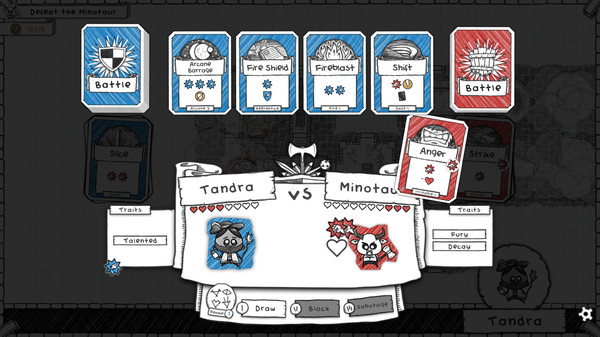
I don’t think this is through lack of trying on the developers part, as the sheer number of classes and their proposed gimmicks indicate intent, though the dearth of unique cards to pad your deck with – along with the fact each deck resets after every short ten minute adventure – means most classes play the same. The game is hit with another blow as it relies so heavily on randomness to create conflict. After every successful run, your class will pick up a trait, which effects that classes deck permanently in the future. Most of the time, this feels like an unintentional hindrance, as classes which rely on blocking for example can have their decks instead padded with spell cards which cannot ever be removed, unless of course, you die.
Segueing into the overarching progression of this rogue-lite, Guild of Dungeoneering hinges on the concept of an ever expiring, ever replenishing conveyor belt of new adventurers. When one class dies, a new character with the same base deck joins the guild, losing all the traits the recently departed acquired. The intent here is almost the inverse of say XCOM, where you slowly build attachments to your squad members, and mourn them when they inevitably get disintegreated by aliens. Only, where the XCOM build bonds, GoD’s character impermanence naturally makes disposability and dispassion a key theme. It doesn’t help that there’s little to no permanent upgrade system. You can buy small talismans which give minor boosts to all your adventurers, and purchasing the few card packs on offer makes future runs contain better loot, but they’re drops in the bucket when so many runs will end up relying on luck anyway.
This is a fairly negative outlook on an otherwise perfectly serviceable game. Echoing the same sentiments as TotalBiscuit, Guild of Dungeoneering’s simplicity is both it’s biggest strength and greatest hindrance in reaching it’s full potential. While enemies and items quickly blend into homogeneous entities, lacking distinct qualities that make them identifiably unique, the ease of play and broadly flat difficulty curve make for enjoyable short bursts of gaming. Building your short-lived deck is often left to chance, but on the occasions you nab the right cards that fit your class, Guild of Dungeoneering doesn’t concern itself too much with balance and lets you engage enemies with silly, evidently broken builds, like lathering the enemy in burns and bleeding, passively sapping them of their health, while you sit comfortably behind several cards capable of swatting any of their attacks away. It’s a shame that the Ultimate Edition doesn’t quite go far enough in making Guild of Dungeoneering a veritable staple of the genre. It’s wonderfully illustrated, and built on a sharp, if simple framework, which due to some shoddy design decisions make for frequently irritating gameplay loops.

 Breaking the Backlog
Leave a comment