
I think you have to look at all three of these games with the understanding that they are fundamentally Flash games. I love Flash games, but much like someone in their 40’s busting out an Amiga or Atari greatest hits collection, they’re likely only to resonate with people because of the nostalgia they provoke, or in the worst case scenarios, expose how shallow and ugly they are compared to the standards of today. That doesn’t stop me enjoying Flash games – and if we’re being honest, the ratio of Flash games which hold up today compared to those on an Atari 2600 is weighted pretty heavy towards the former – but I do think you need to come into these knowing that.
Under the hood, I’m sure this collection is just using a Flash emulator and packaging them in a tidy package. Much of the stilted unresponsiveness to the controls – particularly in the first two games – is exactly how it felt playing those games back in the day. The Last Stand and its direct sequel are towerdefence-ish. You have direct control over ‘Jack’, and the second game lets you place traps and equip fellow survivors, but the first game in particular is largely a shooting gallery. You spend the night blasting zombies which move, in a shocking twist, from left to right. During the day, you allocate your 12 hours either looking for new weapons, scouring for survivors to aid you in your nightly defence, or repair your barricade. That is absolutely it for the first game, with the second adding in the aforementioned trap feature, along with the also aforementioned ability to equip survivors with your surplus equipment, but also a more granular means to interact with the day portion of the game. The night time defence is the exact same, but during the day, you can now select buildings with higher chances to certain loot you might need at the time. It’s a welcome addition, but given both games can be completed in about 20 minutes, it doesn’t change much. In the end, The Last Stand 1 & 2 are fairly mundane, yet oddly enjoyable relics. If they were overly difficult or went on for hours I’m sure I’d feel differently, but given their short nature, they’re a fine time.
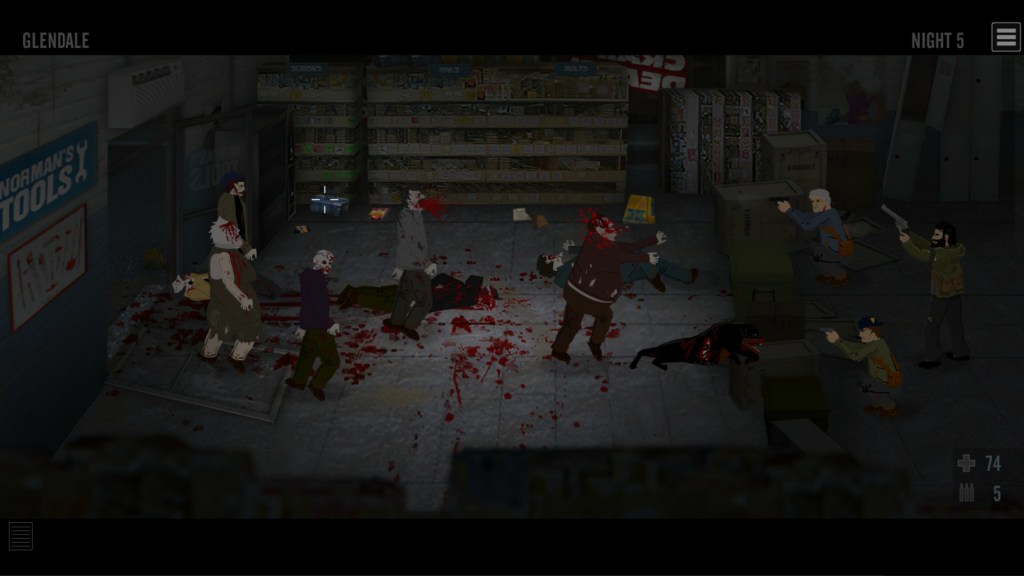
The Last Stand: Union City originally released as the Flash scene was dying and making way for mobile gaming. That in part explains my lack of nostalgia for it (I put like half an hour into it back in 2012), but also hints at why it’s so much more advanced than the other two, and perhaps all the quirky Flash games you reminisce about. It’s truly an RPG experience; shallow and short, for sure, but we have stat distributions, weapon classes, looting, full 2D movement, and to top it off, a visual style which perfectly evokes the series’ tone and early approaches to horror. Combat sits in that awkward area between floaty and imprecise, yet weighty and satisfying. Melee, it should be noted, has a much more prominent role here. Guns are totally present too, but without the points dumped into their required stats, you’ll miss quite a few shots, in a similar way smacking someone with a club will sometimes inextricably miss under a game using D&D style dice roll rules.
However, I do need to reiterate: this is a Flash game. And as such, we shouldn’t expect grand technical flourishes, nor the length a ‘proper’ RPG would offer. It’s RPG lite, where your level ups quickly stop mattering as you one or two shot everything. The game does attempt to keep things fresh with new enemies. Larger zombies with more health become more frequent, zombies missing their lower half’s force you to crouch to strike them, zombie dogs combine the two, while Kevlar equipped and SWAT shield wielding undead also add challenge. I think where Union City really succeeds is in evoking something much bigger than what it really is. It’s visually starting to show cracks, but the atmosphere it creates had me thinking of the paranoid night time getaways in Dying Light. The fairly feeble quest system reminded me of trekking across Dead Island’s…Island. Essentially, Union City may not be a fullfat RPG, yet despite its engine limitations, it somehow, sometimes, manages to feel like a proper zombie wasteland.
It’s a worthwhile shot of nostalgia for mid 20’s nerds who played Flash games, and while the first two instalments might prove too basic for people without those memories, I think there’s definitely something to appreciate with Union City’s endearing gusto.

 Breaking the Backlog
Leave a comment